Why Smart Restaurant Floor Plans Matter More Than Most Operators Realize
Restaurant floor plans affect service speed, guest experience, staffing, menu visibility, and table turns more than most operators think. Learn how modern digital floor plan management helps restaurants run smoother and sell smarter.
When restaurant owners think about technology investments, floor plans do not always rise to the top first.
Menu management feels more urgent. Ordering feels more visible. Marketing feels more obviously tied to growth. Payments feel tied to speed and revenue.
But floor plans sit underneath more of the operation than many teams realize.
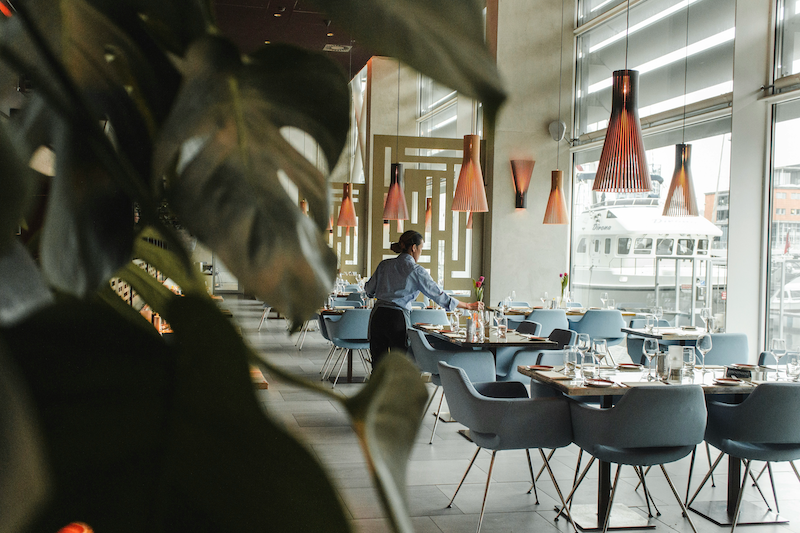
A restaurant's floor layout shapes how guests move, how staff coordinate, which menus appear where, how quickly tables turn, how private events are handled, and how much confusion the team has to manage during service. In other words, floor plans are not just design documents. They are operating logic.
That matters because many restaurants still manage their floor layout with a combination of memory, paper diagrams, verbal instructions, and point-in-time adjustments that never make it back into the system. The result is usually small operational friction everywhere instead of one dramatic failure in one place.
This article explains why restaurant floor plan software matters more than it seems, how it affects service and revenue, and what owners and operators should look for when they want a better way to manage their dining space.
Floor Plans Are Operational Infrastructure, Not Just Layouts
Most people hear the phrase "restaurant floor plan" and think of physical arrangement.
Where are the tables? How many seats are in the dining room? Is the patio open? Where does the bar area begin? Which part of the space is used for private dining?
Those questions matter, but a restaurant floor plan becomes much more important once it connects to live operations.
A useful floor plan is not just about where furniture sits. It helps define:
- which areas are active during service
- how guests are routed and seated
- what menus should be visible in different zones
- how servers are assigned
- how event spaces are separated from everyday dining
- how the team understands capacity in real time
- how management evaluates performance by section or zone
That is why floor plan management belongs in the broader restaurant operations conversation. It influences both the guest experience and the staff experience, often at the same time.
Why Manual Floor Management Starts Breaking Down
Some restaurants can get away with informal floor management for a long time.
If the space is small, the service model is simple, and the menu rarely changes by section, the team may feel like they do not need more structure. But once the business gets even slightly more complex, manual methods start creating avoidable friction.
Verbal coordination does not scale well
Many restaurants still rely on team memory to manage things like:
- which tables belong to which server section
- which patio tables are active on certain nights
- where event guests should be seated
- which menus apply in the bar versus main dining room
- which areas are closed or limited during certain hours
That works only as long as the right people are present and nothing unusual happens.
Once staffing shifts, someone calls out, a private event is added, weather affects the patio, or service gets slammed, those verbal systems get stressed quickly.
Paper diagrams and static tools go stale fast
The problem with static floor maps is not that they are useless. It is that they freeze a living operation into one version that becomes outdated the moment real life changes.
Restaurants constantly deal with moving variables:
- table layouts change
- sections get adjusted
- zones expand or contract
- event needs override standard seating
- service models shift by daypart
- menu availability changes by location in the room
If the floor plan is not part of the operating system, it becomes reference material instead of control logic.
That is a big difference.
Why Floor Plans Affect Service Speed More Than Operators Think
A good floor plan does not just make the room easier to understand. It makes service easier to execute.
Clear zone logic reduces confusion during rushes
During peak hours, ambiguity is expensive.
If staff are uncertain about which section a table belongs to, which menu should be shown there, or which team member owns the guest relationship, small delays start compounding.
That can look like:
- slower seat assignments
- confusion around who picks up a table first
- the wrong menu reaching the guest
- inconsistent pacing between sections
- preventable back-and-forth between front-of-house staff
The busier the service gets, the more those seconds matter.
Digital floor plan management helps by making section ownership, table assignments, and zone-based rules visible and easier to maintain.
Better spatial organization improves table turns
Restaurant owners do not need a lecture on the importance of table turns. But floor plans play into them more than many teams model explicitly.
When the room is organized well operationally, not just aesthetically, restaurants can improve:
- seating flow
- server coverage
- handoffs between staff
- pacing between kitchen and dining room
- guest clarity around where to go or wait
That can reduce friction that indirectly lengthens the dining cycle.
Floor plan software is not magic. It does not force faster turns by itself. But it supports more deliberate zone management, which helps the team run the room with less improvisation.
Floor Plans Also Influence Menu Experience
This is one of the most underrated connections.
Restaurants do not always serve the same menu equally everywhere.
A bar may have a different late-night offering. A patio may show a smaller menu. Private dining may require fixed menus. Event spaces may use special pricing or different visibility rules. Some sections may highlight more casual or more premium offerings depending on service context.
When floor plan logic connects to menu visibility, restaurants can create a much cleaner experience.
Zone-based menu control reduces guest confusion
Guests should not have to figure out why an item appears in one context but not another. The system should handle that logic for them.
For example:
- brunch items can appear only in the right zone during the right hours
- private event menus can stay isolated from normal service
- tasting or chef-led offerings can be tied to specific seating areas
- bar snacks and beverage menus can surface where they are relevant without cluttering the main dining experience
That is easier to do when zones are managed digitally instead of by staff memory.
Better alignment between room and menu supports upsells too
The floor plan is not just about reducing mistakes. It can also support better merchandising.
Different parts of a restaurant naturally support different guest behaviors. A lounge area may invite drinks and small plates. Private dining may support premium packages. Patio seating may favor simpler, faster-turn options. A chef's counter may support curated pairings.
If the restaurant can tie menu logic to physical space, it can make the guest experience feel more intentional while also protecting operations.
Private Events Expose Weak Floor Systems Fast
Restaurants that host private events, rehearsal dinners, tasting experiences, or buyouts feel floor management pain earlier than most.
That is because event service adds complexity in multiple layers at once:
- custom seating plans
- separate staffing assignments
- different menu visibility
- schedule-based transitions
- event-specific branding or guest instructions
- the need to isolate one part of the business without disrupting another
When the restaurant does not have strong floor and zone management, events often get handled through exceptions and workarounds. Managers end up carrying too much context in their heads and translating it manually for the team.
That is risky. Not because staff are incapable, but because event service usually happens when timing matters and guest expectations are high.
A digital floor plan system helps by giving the team a clearer operating structure for:
- which areas are dedicated to the event
- which tables or zones are active for standard service
- how menus and order flows should differ
- what staffing notes apply where
- how transitions should happen before, during, and after the event
That makes private dining easier to run without letting it destabilize the rest of the service.
Staffing Becomes Easier When the Space Is Legible
A restaurant can have strong people and still struggle if the room is hard to manage.
One of the quiet benefits of better floor plan management is that it improves staff coordination without requiring more constant supervision.
Section ownership gets clearer
When sections are assigned clearly and tied to the real room, managers spend less time resolving confusion and more time helping the team perform.
That means:
- cleaner server coverage
- easier handoffs
- less overlap and fewer dropped responsibilities
- better pacing across the room
This matters especially in restaurants with patios, bars, multiple rooms, or changing floor utilization by service window.
Training becomes simpler too
Restaurants often underestimate how much floor ambiguity increases training load.
When the room is managed informally, new team members have to absorb unwritten rules quickly. They learn by shadowing, by correction, and by trial and error. That slows ramp-up and makes consistency harder.
A clearer floor system gives new team members a more legible environment. They can understand the logic of the space faster, which helps them contribute more confidently.
Data Is More Useful When It Reflects Real Zones
A lot of restaurants have access to data, but not always useful operational context.
Floor plan management helps create better context for analysis because it lets operators evaluate the business by real sections of the room, not just at the broadest restaurant level.
That can help answer questions like:
- Which sections turn fastest?
- Which zones drive the best average check?
- Does the patio perform differently at lunch versus dinner?
- Are certain areas underutilized?
- Do event spaces create strong revenue per service window?
- Are bar-adjacent tables supporting different order behavior?
Those are practical operator questions.
Without zone-aware management, they are harder to answer cleanly.
Better data supports layout decisions over time
Restaurants often evolve physically.
A space that made sense on opening day may not be optimal after a year of actual service patterns. Guest behavior may show that one area is underused, another is overloaded, and a third should be merchandised differently.
When floor plan software connects to service and menu behavior, operators can make better decisions about:
- moving tables
- changing section boundaries
- redesigning patio usage
- repurposing event space
- altering menu visibility by zone
In other words, digital floor planning makes the room easier to optimize, not just easier to map.
What Owners Should Look For in Restaurant Floor Plan Software
Not every tool that shows a layout is truly helpful operationally.
A stronger floor plan management system should support more than visual arrangement.
1. Easy zone creation and adjustment
Restaurants need to be able to create zones such as:
- dining room
- patio
- bar
- private dining
- lounge
- event room
And those zones should be easy to modify as service needs change.
2. Table-level assignment and visibility
The system should let the restaurant define which tables belong where, how they are categorized, and what operational logic applies to them.
That includes things like capacity, availability, and zone relationships.
3. Connection to menu visibility
This is a major differentiator.
A useful floor plan system should help determine which menus or menu variants appear where and when. Otherwise the floor map stays visually helpful but operationally limited.
4. Event flexibility
If the restaurant hosts events, the platform should make it easy to reconfigure the room temporarily without creating chaos elsewhere.
5. Real operational context
Ideally, floor plan management should connect to orders, staffing, and analytics, not sit as a disconnected diagram.
That is what makes it part of a real restaurant operations platform rather than just a design tool.
Common Objection: "Our Team Already Knows the Room"
That may be true, especially in smaller or more established restaurants.
But that is not the right question.
The better question is whether the team knowing the room is enough for the business you want to run next.
If the operation is adding complexity, more service modes, more events, more locations, or more turnover in staffing, relying on memory becomes less durable.
The strongest systems do not replace smart operators. They make their knowledge scalable.
That matters because growth usually exposes informal systems faster than routine service does.
Common Objection: "Floor Plan Software Sounds Nice, But Not Essential"
For some restaurants, it may genuinely not be first priority.
But if you are dealing with any of the following, it becomes more important quickly:
- multiple dining zones
- regular private events
- menu differences by area or time
- table assignment confusion
- underused sections of the room
- operational inconsistency between shifts
- difficulty analyzing section performance
In those cases, floor plan management is not cosmetic. It supports core service execution.
A Practical Way to Improve Without Overcomplicating It
Restaurants do not need to turn floor planning into an architecture exercise.
A practical improvement path looks more like this:
- Define the real operating zones in the restaurant today.
- Clarify which tables belong to which zones and why.
- Identify where menu visibility should change by section, time, or event.
- Standardize how server coverage and assignments map to the room.
- Start collecting performance data by zone.
- Adjust layout and logic based on what the business actually shows.
That process helps the restaurant move from implicit room management to explicit room management.
And that usually leads to smoother service.
Why This Matters for Restaurant Owners Specifically
Owners often focus on the most visible revenue levers first, marketing, menu engineering, labor control, pricing, and direct ordering.
All of those matter. But floor plans influence how efficiently those levers play out in the real room.
If the space is harder to manage than it needs to be, the team spends more effort compensating. That costs labor, consistency, and guest confidence.
A better floor plan system gives the operation a stronger foundation. It helps the restaurant coordinate people, menus, events, and sections with less guesswork.
That is valuable because smoother operations do not just reduce stress. They improve the guest experience in ways customers feel even if they never see the system behind it.
The Bottom Line
Smart restaurant floor plans matter because they turn physical space into usable operating logic.
They help restaurants seat better, serve faster, coordinate staff more clearly, support zone-based menu experiences, and run events without creating unnecessary friction.
For owners and operators, that is the real opportunity. Not just having a prettier digital map of the room, but using floor plan software to make the business easier to run.
As restaurants grow more complex, the room itself has to become more manageable, not less. Digital floor plan management is one of the tools that helps make that possible.
And for many restaurants, it is a bigger lever than it first appears.
Spork helps restaurants manage floor zones, menus, events, and service operations from one platform. If you want to run a more coordinated dining room, you can request a demo.